microsilica

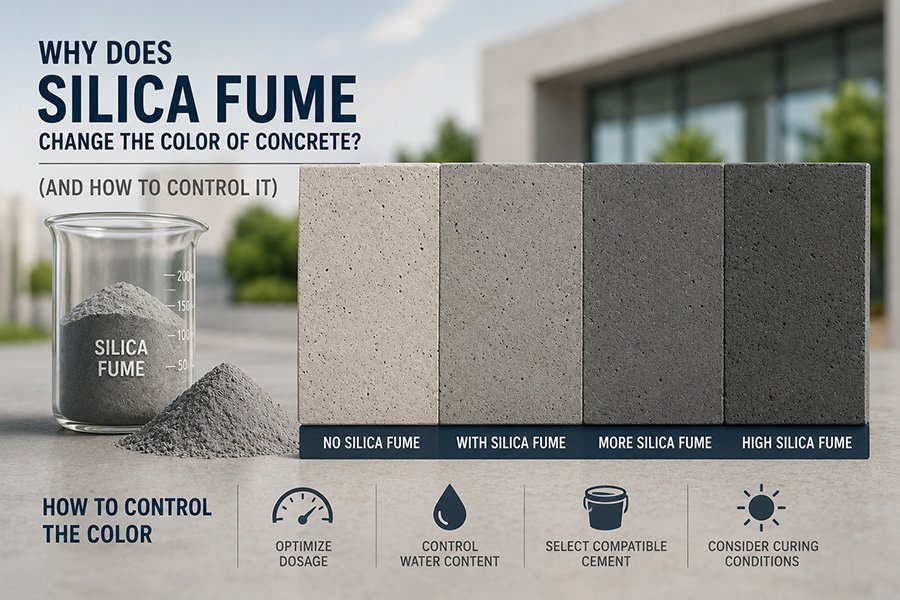
Why Does Silica Fume Change the Color of Concrete? (And How to Control It)

Why Does Silica Fume Change the Color of Concrete? (And How to Control It)

When a high-profile bridge deck or architectural precast panel arrives on site with uneven blue-grey mottling instead of the specified uniform tone, the immediate cost is a rejected batch, a delayed pour cycle, and forensic testing bills that can exceed $15,000 per incident. Architects and structural engineers spec silica fume for its unmatched strength and […]

Why Does Silica Fume Change the Color of Concrete? (And How to Control It) Read More »

Silica fume for Soil Stabilization

Silica fume for Soil Stabilization

Silica fume, a byproduct of the silicon and ferrosilicon alloy production, has gained prominence in the construction industry, particularly for its application in soil stabilization. This fine powder, composed of amorphous silicon dioxide, enhances soil properties and strengthens construction materials, making it a valuable resource in various construction projects. What is Silica Fume? Silica fume,

Silica fume for Soil Stabilization Read More »

Silica Fume for Marine Concrete Structures

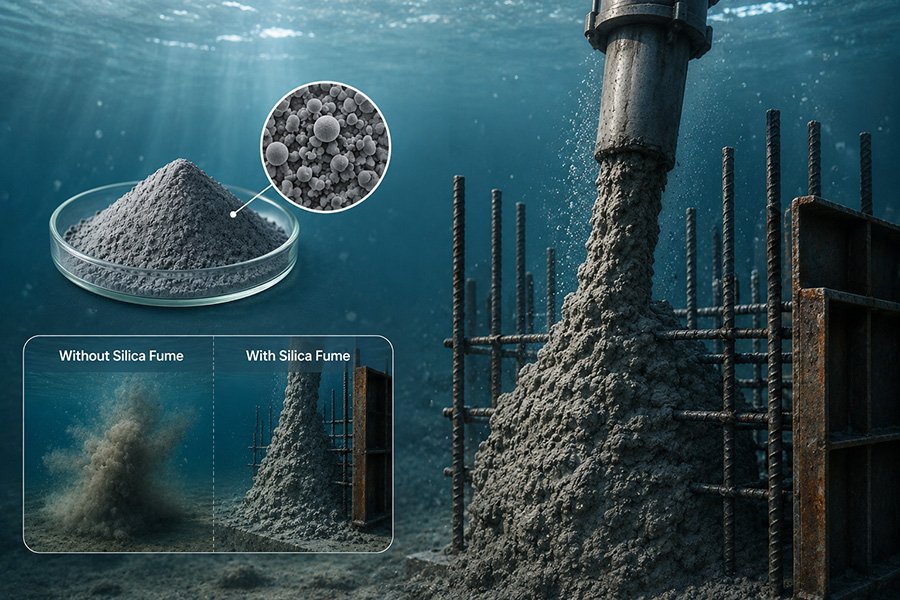
Silica Fume for Marine Concrete Structures

Introduction In the ever-evolving world of construction, marine concrete structures face unique challenges due to the harsh and corrosive environment they operate in. Seawater, salt spray, and constant exposure to moisture can wreak havoc on traditional concrete, leading to premature degradation and costly maintenance. At HSA, we understand these challenges and have developed a pioneering

Silica Fume for Marine Concrete Structures Read More »

85%-Undensified-Silica-Fume

Microsilica

Micro-silica fume is a by product of high purity quartz, coke and sawdust reduction in the production of ferrosilicon or metallic silicon during the production of complex reactions in smelting. Among them, the quartz stone and carbon at 1750 ℃, the reduction reaction to produce unstable carbon monoxide, the temperature is higher than 2160 ℃,

Microsilica Read More »

Scroll to Top