A single pallet of improperly stored microsilica can silently lose up to 30% of its pozzolanic activity within six months—by the time the batch is added to a UHPC mix, the resulting shortfall in compressive strength may trigger costly rejection of an entire pour and delay a critical infrastructure project. Managing inventory effectively means understanding the chemical and physical degradation risks that erode silica fume’s value before it ever reaches the mixer.
Why Silica Fume Degrades: Chemical Instability of Amorphous SiO₂
Silica fume consists of ultrafine, non‑crystalline silica spheres with specific surface areas typically ranging from 15 to 30 m²/g (BET). This high‑energy, metastable amorphous state is exactly what drives the pozzolanic reaction in concrete, but it also makes the material vulnerable to slow environmental attack. In the presence of atmospheric moisture and CO₂, the surface siloxane bonds begin to hydrolyze, forming silanol groups and gradually converting the reactive amorphous silica into less active silicic acid species. Simultaneously, any contact with alkaline dust or ambient carbon dioxide can initiate surface carbonation, producing a thin passivating layer that reduces the material’s ability to release soluble SiO₂ when later mixed with cement paste.
The rate of this degradation is strongly dependent on storage temperature and humidity. Even in sealed bags, temperature fluctuations can cause micro‑condensation, accelerating the transformation. For high‑performance applications, such as those relying on the significance of silica fume in enhancing the quality of concrete, maintaining near‑original reactivity is not optional—it is a specification requirement. Specifiers should note that ASTM C1240 mandates a maximum loss on ignition (LOI) of 6% and a moisture content limit, both of which can be exceeded if inventory is neglected.
Moisture Uptake: The Primary Deactivation Pathway
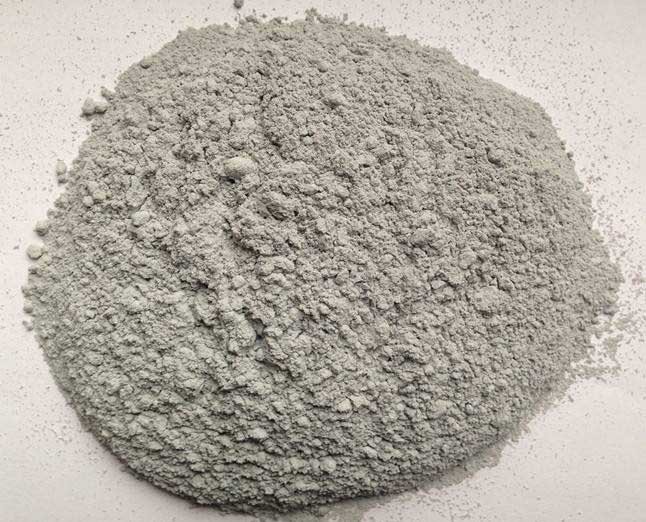
Because silica fume is extremely hygroscopic, moisture absorption is the most common and destructive inventory threat. Undensified grades, with bulk densities as low as 200–350 kg/m³, present an enormous surface area to the surrounding air. Within weeks in a humid environment, the powder can absorb 2–4% of its own weight in water. This causes the fine particles to adhere into hard agglomerates that resist re‑dispersion, effectively reducing the material’s effective surface area and blocking its ability to fill the interfacial transition zone (ITZ) in concrete.
Signs of moisture‑induced degradation include:
- Hard lumps that do not crumble under light finger pressure
- LOI values exceeding 3% (even if within ASTM limits, reactivity starts to drop)
- Increased bulk density variation within a single bag or bulk container
- Change in color from light gray to slightly yellowish or off‑white patches
- Elevated moisture content detected by a rapid moisture meter (>1% for densified, >2% for undensified)
Densified silica fume is more resistant because its agglomerated granules reduce direct atmospheric exposure, but it is not immune. Prolonged storage under high humidity can still cause surface hydration of the granules, leading to a gradual loss of dispersibility when the product is mixed into silica fume for concrete cement. The best defense is proactive monitoring and strict adherence to recommended storage conditions.
Agglomeration Dynamics: How Storage Time and Conditions Alter Physical Properties
The progression from free‑flowing powder to partially hydrated lumps follows a predictable kinetic profile governed by relative humidity, temperature, and initial bulk density. Undensified silica fume can form soft agglomerates within 30 days at 70% RH; after 90 days these can become rock‑hard clusters that require crushing—if recovery is even possible. Densified material, due to its lower specific surface area, shows a much slower agglomeration rate but still exhibits measurable changes in particle size distribution and bulk density over time.
The table below contrasts the typical storage behavior of undensified and densified silica fume under identical, moderately controlled warehouse conditions (25 °C, 60% RH, original sealed packaging). Understanding these differences is critical for setting effective re‑test schedules and for interpreting acceptance criteria on older inventory.
| Storage Parameter | Undensified Silica Fume | Densified Silica Fume |
|---|---|---|
| Initial bulk density (kg/m³) | 200–350 | 500–700 |
| Moisture gain after 3 months (%) | 2.0–3.5 | 0.5–1.2 |
| Agglomeration after 6 months | Hard lumps >5 mm common | Partial softening of granules, minor clumping |
| Dispersibility in mix | Severely reduced; requires high‑shear mixing | Mostly retained, but longer mixing may be needed |
| Recommended max storage without re‑testing | 6 months | 12 months |
These changes directly reflect shifts in the physical state of the silica fume. For a deeper understanding of the measured parameters, refer to the difference between bulk density and relative density of silica fume. Maintaining consistent, low humidity—ideally below 60% RH—is the single most effective control to flatten the agglomeration curve and extend usable life.
Reactivity Loss and Consequences for Concrete and UHPC Performance
When aged, moisture‑exposed silica fume is finally introduced into a concrete or UHPC mix, the performance penalties cascade quickly. First, the reduced effective surface area means fewer reactive silica sites are available to consume portlandite and generate calcium‑silicate‑hydrate (C‑S‑H) gel. This directly lowers long‑term strength and densification. Second, the hardened agglomerates act as inert fillers at best, or as weak inclusions that disrupt particle packing and create local micro‑cracking around the non‑reactive lumps. The result is a more porous ITZ, higher permeability, and a measurable drop in durability indices such as rapid chloride penetration resistance.
From a mix design perspective, operators may compensate by increasing the silica fume dosage, but this raises the w/b ratio requirement due to the additional water demand of the undispersed material, counteracting the very low porosity that UHPC demands. In pre‑bagged, quality‑controlled products, the failure to detect degraded silica fume can lead to systematic underperformance across multiple project elements. A single batch that tests below the ASTM C1240 activity index threshold of 85% at 7 days should trigger a full inventory audit and replacement. The financial risk of ignoring these signals far outweighs the cost of proper storage.
Inventory Management Protocols for Maximum Shelf Life
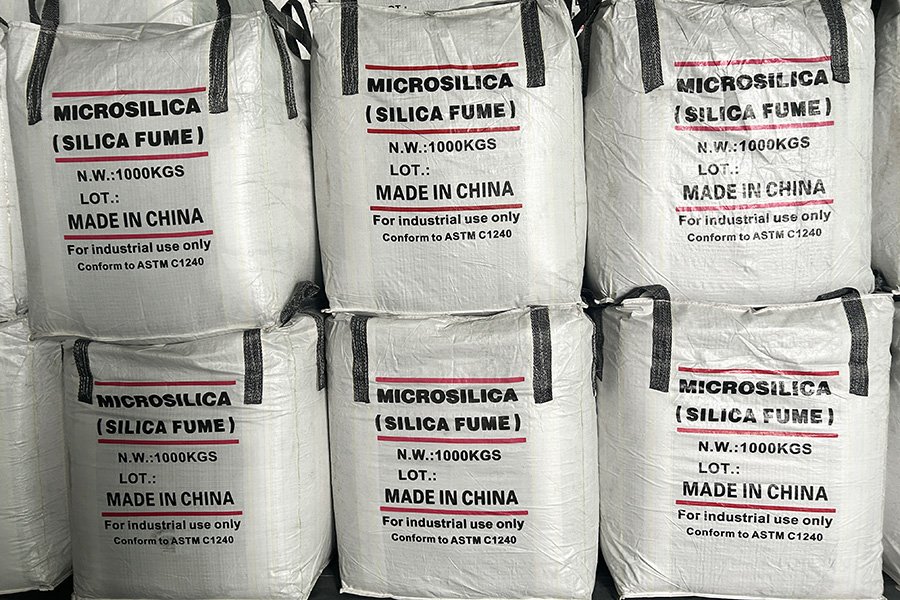
Effective inventory management begins at the receiving dock and continues through every day of storage. The foundation is environmental control: silos and indoor storage areas must maintain temperatures below 30 °C and relative humidity below 60% at all times. For bagged product, original polyethylene‑lined bags or sealed supersacks should never be opened until immediately before use, and partial bags must be resealed with moisture‑barrier tape. Pallets should sit on raised platforms away from exterior walls and concrete floors that can transmit ground moisture.
A disciplined first‑in‑first‑out (FIFO) system enforced by clear batch labeling is non‑negotiable. Additionally, a scheduled quality surveillance program should test retained samples at 3‑month intervals for undensified grades and every 6 months for densified. Minimum checks include:
- Loss on ignition (LOI) per ASTM C1240 – trend upward indicates carbonation and hydration
- Moisture content via oven‑drying – must stay below 3.0% for undensified, 1.5% for densified
- Activity index at 7 days – any drop below 85% requires isolation of the batch
- Visual and tactile inspection for lumps and color change
For large‑volume projects, instrumenting storage areas with data‑logging RH/temperature sensors provides an audit trail and early warning. In critical applications, pre‑screening a small test mix before committing a full silo can prevent catastrophic quality failures. Adopting these protocols transforms inventory management from a logistical afterthought into a genuine quality assurance system.
Refractory-Grade Silica Fume: Additional Storage Considerations
High‑SiO₂ grades—96% and 98% purity—used in refractory castables and gunning mixes face an even stricter set of storage constraints. Beyond reactivity loss, moisture pickup in refractory silica fume can introduce hydrogen defects that cause spalling during high‑temperature curing, and any carbon contamination from atmospheric CO₂ raises the risk of carbon‑induced porosity in fired products. To maintain the low‑cement castable performance expected of 96 grade silica fume for refractory, these products often require storage in climate‑controlled rooms with RH below 40% and continuous nitrogen blanketing for larger silos. Procurement teams should factor in these environmental demands when calculating total cost of ownership and selecting between undensified and densified refractory grades.
Frequently Asked Questions
Q: What is the typical shelf life of densified silica fume in unopened bags?
A: In a controlled environment (≤30 °C, ≤60% RH), densified silica fume in original sealed packaging retains full reactivity for 12–18 months. Many producers guarantee 12 months; after that, activity index re‑testing is strongly recommended before use in structural concrete or UHPC.
Q: Can agglomerated undensified silica fume be restored?
A: Light agglomeration can sometimes be broken by mechanical sieving or jet milling, but the process cannot reverse pre‑hydration. Once silanol bonds have formed, the lost pozzolanic surface area is permanent. Always test a representative sample for LOI and activity index before attempting to recover an aged batch.
Q: How can I quickly detect moisture damage in stored silica fume?
A: Perform a tactile inspection for hard, non‑friable lumps and measure LOI. A value above 2% often signals the onset of performance loss; above 3% the probability of failing the ASTM C1240 activity index increases sharply. A rapid moisture meter reading exceeding 1% for densified or 2% for undensified also warrants a full quality investigation.
Q: Does undensified silica fume degrade faster than densified?
A: Yes. Its ultra‑low bulk density and high specific surface area accelerate moisture uptake. Undensified silica fume can develop problematic agglomerates in as little as three months under 60% RH, whereas densified material typically remains usable for twice that duration under identical conditions.
Q: What are the essential storage parameters to prevent reactivity loss?
A: Store at temperatures below 30 °C, relative humidity under 60%, and keep bags sealed on elevated pallets. Implement first‑in‑first‑out rotation, avoid temperature swings that cause condensation
About Henan Superior Abrasives (HSA)
Henan Superior Abrasives (HSA) is a China-based global supplier of high-quality silica fume (microsilica) for concrete and refractory applications. Supplying both densified and undensified grades compliant with ASTM C1240 and EN 13263, HSA serves customers in 30+ countries with reliable microsilica solutions for HPC, UHPC, precast concrete, shotcrete, and other high-performance construction materials.
Get a Quote or Free Sample
Ready to improve your concrete performance with premium silica fume? Contact our technical team today — we respond within 24 hours and can arrange free samples for qualified projects.
- 📧 Email: sales@superior-abrasives.com
- 💬 WhatsApp: +86-186-3863-8803