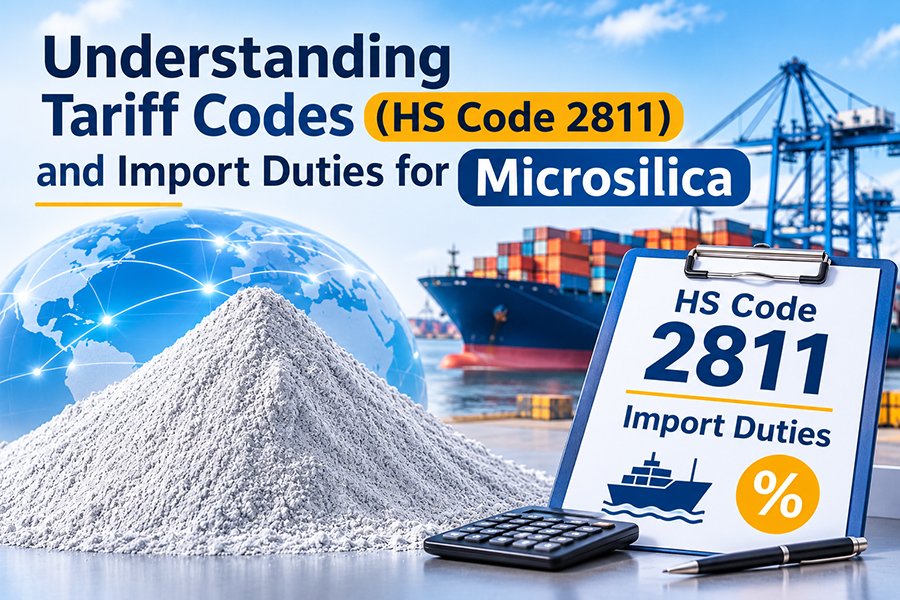
Using the wrong tariff code for microsilica shipments can trigger a 14 % duty rate instead of zero, raising your project’s landed cost by $40 000 or more per container load—and, worse, risk seizure at the port. Many construction and oil‑field buyers unknowingly accept trade documents showing HS Code 2206, an agricultural classification for fermented beverages, simply because early freight forwarders mislabelled the product. Clarifying the correct code and understanding the associated import duties puts you back in control of your supply chain cost and compliance.
The Root of the Misclassification: Why HS Code 2206 Still Appears
HS Code 2206 covers “other fermented beverages” such as cider, perry and mead. Silica fume—a dry, ultrafine pozzolanic powder—has nothing in common with these products. The mis‑labeling can often be traced to an early digital customs entry where an inexperienced agent searched for “silica” and selected a code linked to diatomaceous earth used in beverage filtration. That code then propagated through successive manifests under the “once classified, always classified” inertia. In a few jurisdictions, silica fume intended for water treatment or as a filtering aid has been incorrectly bundled with food‑grade filtration media, reinforcing the 2206 error. Procuring engineers who inspect shipping documents only for quantity and price miss this detail, passing the tariff shock down the payment chain.
The consequences go beyond a higher duty bill. Customs authorities use HS codes to flag restricted goods, enforce anti‑dumping regulations, and apply health‑inspection protocols. Having microsilica declared as a beverage can delay release by two to four weeks while the shipment undergoes food‑safety sampling, during which demurrage charges accumulate. For an infrastructure project on a tight pour schedule, that delay may cost far more than the duty differential.
The Correct HS Code for Microsilica: 2811.22
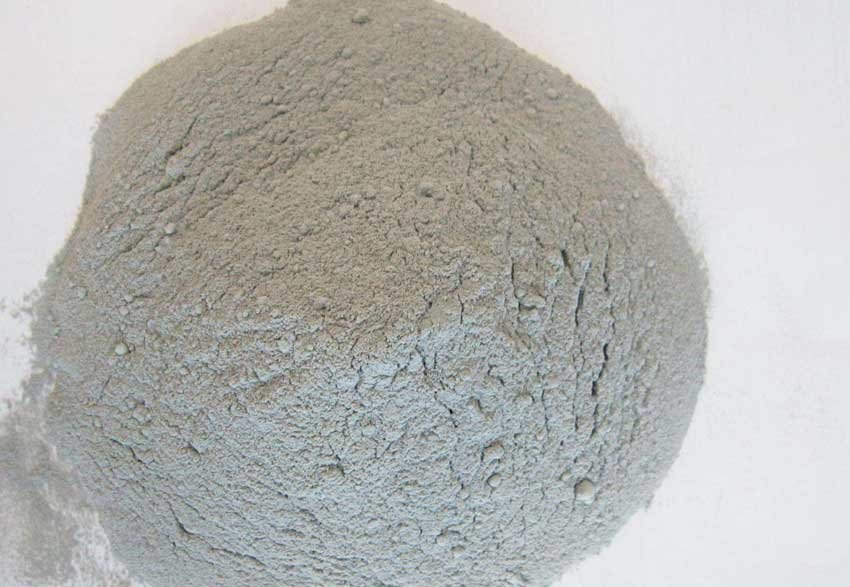
Microsilica—whether densified or undensified, whether sold for high‑performance concrete, refractory castables or 94 Grade Silica Fume For Oil Well cementing—is chemically silicon dioxide (SiO₂) in an amorphous, particulate form. All major customs nomenclatures, including the Harmonized System maintained by the World Customs Organization, place silicon dioxide under heading 2811, “Other inorganic acids and other inorganic oxygen compounds of non‑metals.” The specific sub‑heading 2811.22 covers silicon dioxide with no stipulation as to purity, particle size or physical form. This code is endorsed by national rulings such as the EU Binding Tariff Information (BTI) for “microsilica / silica fume,” by US CBP classification under HTSUS 2811.22.0000, and by Indian customs schedule chapter 28 item 2811 22.
Consequently, a shipment containing 96 % SiO₂ amorphous silica fume with a BET surface area of 18 000 m²/kg is classified identically to an 85 % grade intended for refractory gunning. The code’s neutrality eliminates tariff arbitrage between grades, simplifying sourcing. However, buyers must still ensure that the chemical composition stated on the commercial invoice aligns with the 2811 description, because a material with less than 60 % SiO₂ might fall under a different heading such as 3824 (chemical products not elsewhere specified).
Import Duty Rates Under HS 2811.22: A Regional Comparison
While the HS code establishes a universal six‑digit foundation, actual duty rates are set by each importing country and often vary based on free‑trade agreements, country of origin and end‑use declarations. Below is a summary of the general (MFN) rates applied to silica fume from a Chinese supplier, along with potential preferential rates available under FTAs.
| Importing Country / Bloc | General Duty Rate (MFN) on 2811.22 | Preferential Rate & Condition |
|---|---|---|
| United States | 3.7 % ad valorem | Zero under Section 301 exclusion if applicable; otherwise 3.7 % plus 7.5 % additional tariff on some Chinese goods |
| European Union | 3.0 % | Zero (duty‑free) for silicon dioxide, regardless of origin (classification code 2811 22 00 90) |
| India | 7.5 % IGST + Basic Customs Duty 7.5 % | No FTA benefit with China; aggregate import duty ≈ 15 % (including social welfare surcharge) |
| GCC (Gulf Cooperation Council) | 5 % | Applies uniformly across UAE, Saudi Arabia, Qatar etc.; no extra restriction on Chinese origin |
| Australia | 0 % | China‑Australia FTA keeps duty zero; no customs barrier for this product |
Misclassification under HS 2206 would expose these shipments to entirely different duty bands, often in the range of 10–20 % plus excise levies on alcoholic beverages, an absurd outcome that can be easily avoided by double‑checking the six‑digit code on every Bill of Lading and packing list.
How Purity, Densification and End‑Use Affect Customs Valuation—Not Classification
Customs valuation for microsilica is transaction‑based: the price actually paid or payable governs the duty calculation, provided the parties are unrelated. While the HS code does not change with SiO₂ content, the declared value—and hence the duty outlay—can shift depending on the grade. A container of densified 98 % silica fume priced at $550 per metric ton CIF Rotterdam will attract a higher duty quantum than an undensified 85 % grade at $280 per ton, even though both land at 2811.22. For buyers evaluating Microsilica 930 U versus a densified alternative like Microsilica 930 D, the duty‑rate stability is reassuring: format choice does not trigger a re‑classification audit.
Where end‑use can intervene is through tariff suspension or end‑use relief schemes. In the EU, silicon dioxide used for the manufacture of solar panels or semiconductor wafers may qualify for duty‑free treatment under specific TARIC codes, but that provision applies to fused silica, not microsilica for concrete. Similarly, India’s Project Import scheme can reduce the effective duty rate when silica fume is imported for a designated infrastructure project, but such benefit is tied to the project registration, not to the product code. Therefore, the base classification under 2811.22 remains the fulcrum around which all duty‑planning revolves.
Steps to Eliminate Misclassification and Lock In Duty Certainty
Getting the tariff code right on every microsilica shipment requires a systematic review of your procurement and logistics documents, not just a one‑time e‑mail to the supplier. The following sequence prevents recurrence of the 2206 error and gives your compliance team traceable records:
- Audit the supplier’s commercial invoice. Check that the six‑digit HS code 2811.22 appears next to the product description and that the chemical name “silicon dioxide (amorphous silica fume)” matches the code’s scope.
- Request a binding tariff ruling. In the US, file a request for a CBP binding ruling; in the EU, apply for a Binding Tariff Information (BTI) decision. Both are free and protect your classification for three to six years.
- Align INCOTERMS with your customs broker’s workflow. Under CIF terms, the overseas supplier is responsible for export declaration, but the import classification is your liability. Provide explicit code instructions in the purchase order.
- Train your freight forwarder’s entry writers. A simple note “Product is not a beverage; HS 2811.22 for all silica fume purchases” in the shipping instructions averts auto‑population of legacy 2206 data.
- Run a periodic customs audit. Pull your last 12 months of entry summaries and verify the HS code against your purchase order archive. Flag any deviation immediately; most customs authorities allow post‑entry amendments before an audit is triggered.
Projects that consume 94 Grade Silica Fume For Concrete at volumes exceeding 1 000 tons annually can save $25 000–$60 000 in unnecessary duties just by correcting the code, before any negotiation on the product price itself.
The Financial Cascade of a Wrong Tariff Code
An erroneous HS code like 2206 does more than inflate the duty line. It can invalidate a bond, trigger a penalty of up to 20 % of the underpaid duty, and—if the misdeclaration is judged negligent—void your importer’s record of compliance, resulting in 100 % examination rates for years. Insurance coverage on the cargo may also be jeopardized because the policy is written against a specific “nature of goods”; a beverage description contradicts a construction‑grade powder. On large‑scale projects where multiple container loads arrive weekly, one mis‑filed entry can cascade into a fleet‑wide problem.
Equally, when you eventually re‑sell the imported material or incorporate it into a structure, the misclassification can cause a mismatch between input tax credits and output VAT in GST or VAT systems, creating an audit trail that tax authorities will exploit. For 92 Grade Silica Fume For Oil Well applications in remote oil fields, a customs hold‑up due to a code discrepancy can idle a drilling crew costing $80 000 per day. The duty cost is minor beside the downtime risk.
Procurement managers who routinely verify the HS code as part of their quality‑assurance checklist consistently report smoother port clearance and a more predictable total landed cost. Because the code sits at the intersection of logistics, finance and compliance, it deserves the same scrutiny as the SiO₂ assay or the bulk density specification of the microsilica arriving at the jobsite.
Frequently Asked Questions
Q: What is the correct HS code for importing microsilica for concrete?
A: The universally recognized code is 2811.22 (silicon dioxide). This applies to all purity grades, both densified and undensified forms, and regardless of end-use in high-performance concrete, refractory or oil-well cementing. Always avoid HS 2206, which is for fermented beverages.
Q: Why do some customs documents show HS Code 2206 for silica fume?
A: The code 2206 (fermented beverages) often appears because early freight entries mistakenly linked silica fume to filtration aids used in food processing. Once entered into digital systems, the wrong code can replicate across shipments. Suppliers and importers should proactively correct it to 2811.22 before customs clearance.
Q: How much import duty will I pay on microsilica shipped from China to the EU?
A: Under HS 2811 22 00 90, the EU applies a 0 % duty on silicon dioxide, irrespective of Chinese origin. No preferential certificate is required. If the wrong code 2206 is used, duties could reach 14 % or more plus excise taxes.
Q: Does the purity of silica fume (e.g., 94 % vs. 98 % SiO₂) change the tariff code?
A: No. All amorphous silica fume with a silicon dioxide content above 60 % falls under HS 2811.22. Duty is calculated on the transaction value, so higher-purity grades attract a larger duty quantum but at the same ad-valorem rate.
Q: Can I get a binding ruling on the HS code for future microsilica imports?
A: Yes, both the US CBP and EU customs authorities issue binding tariff rulings (BTI in the EU) that are legally valid for several years. Having a ruling prevents disputes at the border and is recommended for any buyer importing more than 200 tons per year.
About Henan Superior Abrasives (HSA)
Henan Superior Abrasives (HSA) is a China-based global supplier of high-quality silica fume (microsilica) for concrete and refractory applications. Supplying both densified and undensified grades compliant with ASTM C1240 and EN 13263, HSA serves customers in 30+ countries with reliable microsilica solutions for HPC, UHPC, precast concrete, shotcrete, and other high-performance construction materials.
Get a Quote or Free Sample
Ready to improve your concrete performance with premium silica fume? Contact our technical team today — we respond within 24 hours and can arrange free samples for qualified projects.
- 📧 Email: sales@superior-abrasives.com
- 💬 WhatsApp: +86-186-3863-8803