Silica Fume Concrete

How to Calculate the Exact Water-to-Binder Ratio When Using Microsilica

How to Calculate the Exact Water-to-Binder Ratio When Using Microsilica

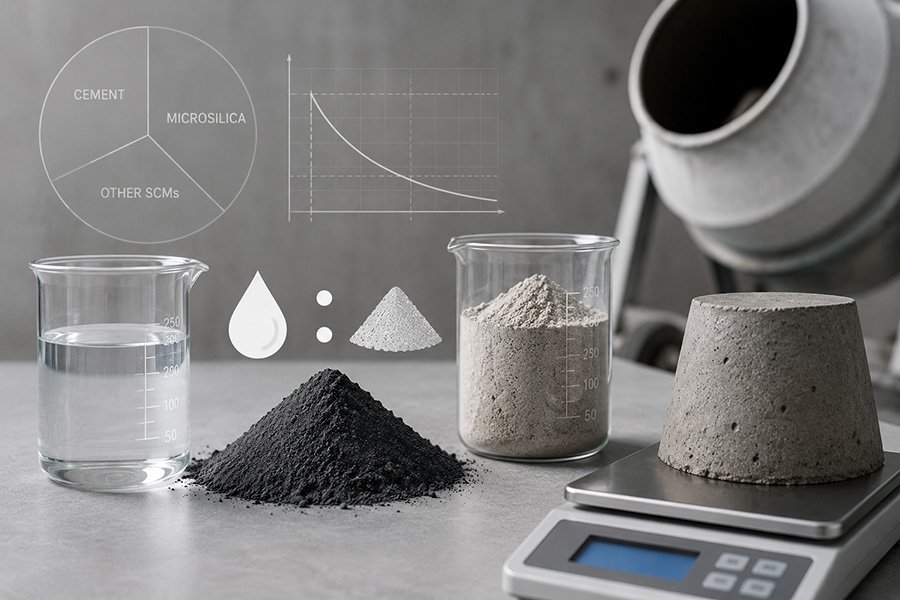
A miscalculated water-to-binder (w/b) ratio when silica fume enters a high-performance concrete mix can silently erase the very durability gains the specifier demanded, shifting a 100-year service life design toward premature chloride ingress and costly structural repair. The core challenge is not that microsilica is difficult to use, but that its extreme specific surface area—often […]

How to Calculate the Exact Water-to-Binder Ratio When Using Microsilica Read More »
How to Prevent Plastic Shrinkage Cracking in Silica Fume Concrete

How to Prevent Plastic Shrinkage Cracking in Silica Fume Concrete

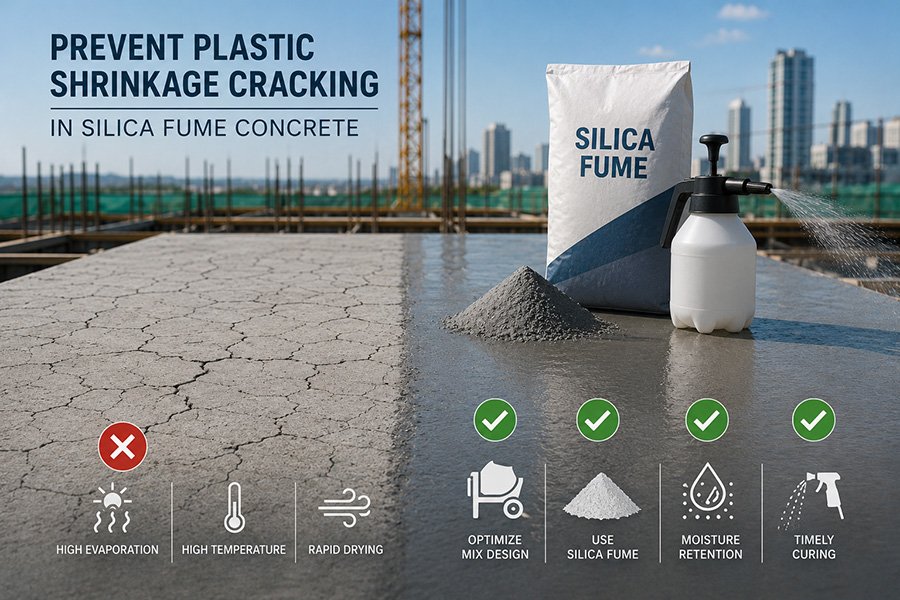
Plastic shrinkage cracking in silica fume concrete can cut a slab’s service life by 30% or more before curing even begins. When bleed water evaporates faster than it rises, capillary tension builds in the near-surface paste – and at w/b ratios below 0.40, silica fume’s extreme fineness virtually eliminates bleeding. Engineers specifying high-performance concrete (HPC)

How to Prevent Plastic Shrinkage Cracking in Silica Fume Concrete Read More »

Why Does Silica Fume Cause Poor Workability in Concrete?

Why Does Silica Fume Cause Poor Workability in Concrete?

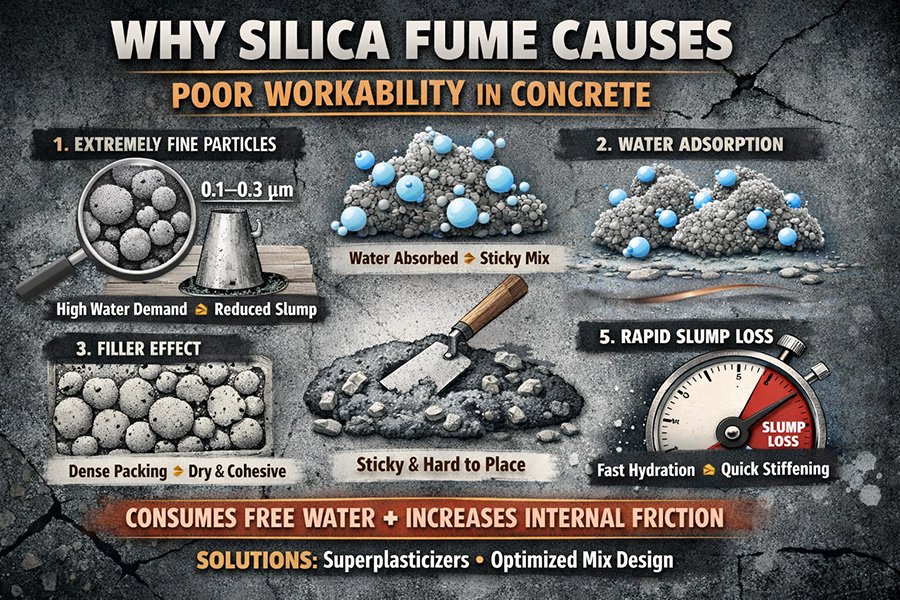
Silica fume is widely used to enhance strength, durability, and impermeability of concrete—but it is also well known for causing poor workability. This effect comes from several material-level mechanisms rather than a single factor. Technical explanation 1. Extremely Fine Particle Size (High Surface Area) Silica fume particles are about 0.1–0.3 μm, nearly 100 times finer

Why Does Silica Fume Cause Poor Workability in Concrete? Read More »

Scroll to Top